
Northern Arizona. Off the grid. Fully invested.
We're Chad and Lisa — and we've been doing things our own way for a long time.
Nine years on a mountain ranch. Two decades building digital things for small businesses. One conviction: the little guy deserves better tools, better strategy, and someone who actually gives a damn.
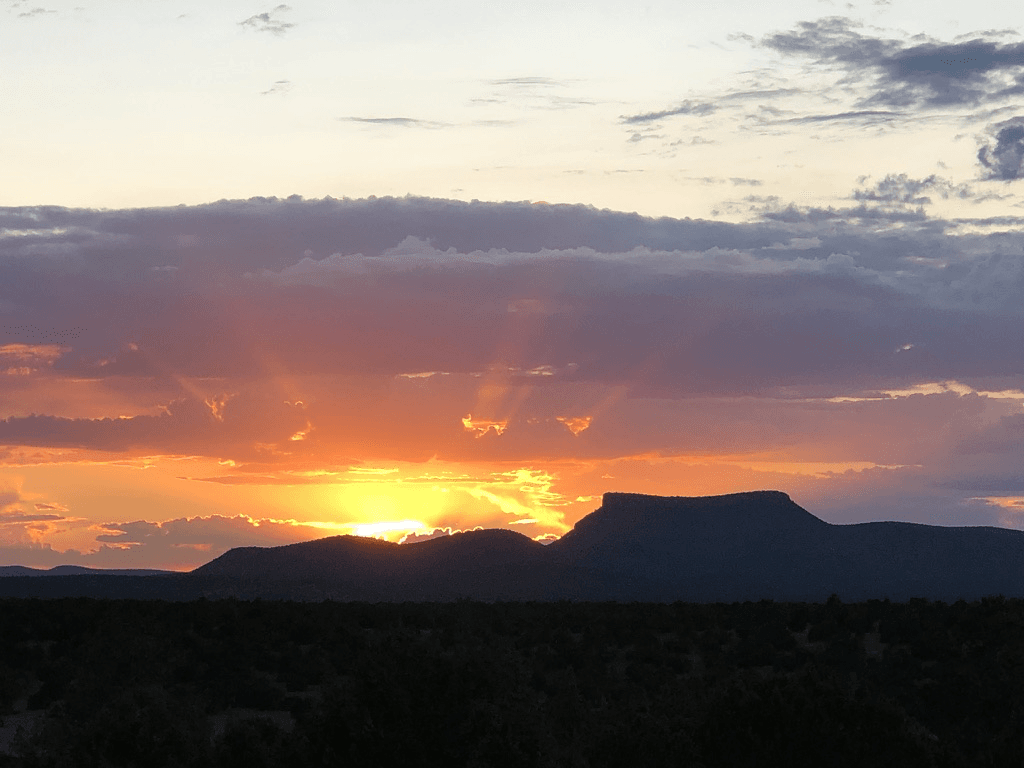
Home. Sierra Verde Ranch, Northern Arizona.
Lisa — Partner, C&L Innovations
In the mid-1990s, Lisa was hired as an office manager and receptionist for a small tech startup called Common Knowledge. Every employee in the building was a developer or network engineer — marketing was simply nobody's job. Lisa had downtime, ambition, and access to every software tool a tech company in the nineties could offer. So she started teaching herself. Graphics. Web updates. Marketing materials. Nobody asked her to. She just saw a gap and filled it. When the CEO noticed what she was producing, her title changed and so did her paycheck. The clearest measure of how seriously they took her work: she wrote the company's first formal marketing plan after reading a handful of books on the subject. The CEO took that plan and built his entire investor pitch around it.
She left that company to co-found something new. Chad was part of the venture too, along with one of the most talented developers either of them had worked with. The company was called InterCation — a mashup of internet and application — because the idea was never to build just one thing. It was the tech boom. The mentality was: assemble the right people and build whatever you're smart enough to build.
They had the right people. A brilliant backend developer, a natural salesman, and Lisa running marketing and all of the frontend. Their first product was a web platform subscription service — over 300 paying customers acquired on almost no marketing budget. The product worked. The team was genuinely talented. But there's a meaningful difference between supporting something and only supporting something. Once the building phase was over, InterCation became a single platform in maintenance mode — the same system, day after day, with the creative problems long since solved. For people wired to figure things out, that's a particular kind of restless. The variety of working with multiple clients across different industries, different challenges, and different stages of growth turned out to be the model that actually fit.
What Lisa carried out of that chapter was a hard-won understanding of dependency economics. Talented developers are expensive. When your entire budget flows toward one person's salary, every creative decision runs through their bandwidth, their priorities, and their appetite for the work. It's nobody's fault — it's just the math of building software when you're running lean. You get what you can afford, and you build what they're willing to build.
For the next several decades, Lisa worked within that reality. Third-party platforms with hard limits. Imperfect backend systems. The best frontend she could engineer within whatever she was given. It made her exceptionally good at creative problem-solving under constraint — and it made the moment those constraints disappeared feel like something more than a skill upgrade.
That moment arrived in the past year. Using modern AI-assisted development tools, Lisa now builds what's actually in her head — not an approximation, not a workaround, but the thing itself, shaped around what the client actually needs. In that time she's launched a custom site for a Utah roofing company at bros-construction.com, a luxury homebuilder platform at vanguardbuilders.com, and has two proptech applications in active development — one for a market that has needed a better solution for a long time, and one she's not talking about yet.
“I love helping the little guy. Finding what sets a client apart from the competition and executing that vision clearly — that's what makes this job fun.”
Helping people do their thing better is our thing.
Chad — Partner, C&L Innovations
Chad spent years as a salesperson for a marketing services firm serving the home building industry. On paper, the firm was a heavyweight — majority owned by 32 of the top builders in America. In practice, Chad's book of business was 75% mom and pop shops and smaller regional builders. The little guys. The ones who couldn't afford to get it wrong.
The firm wanted him selling everything in the catalog. Chad had a different approach. Some of those services he believed in. Others he thought were overpriced and underwhelming — and he wasn't wired to sell something he wouldn't buy himself.
So he developed a habit. Before every client meeting, he'd walk in with something free. A tool they didn't know about. A tactic they could implement that afternoon. A competitive edge that didn't cost them anything. It wasn't in his job description. It was just how he thought about people.
That instinct never went away. It just needed a bigger outlet.
When C&L took on a partner's wellness business as a client, they inherited a broken check-in app. Unpaid members walking in unchallenged. No real-time staff visibility. Every business rule change meant waiting on an overseas developer who made them reprint their QR codes.
Chad had never written a line of production code in his life. He built it anyway.
Using Claude Code and a lot of stubbornness, he replaced the broken platform entirely — real-time check-in alerts, payment gating, a staff task queue, Stripe subscriptions, two-way SMS, native mobile apps in both app stores. The thing that was supposed to be impossible for a non-coder became a production system running a real business.
That's when C&L's direction changed. The most valuable thing Chad had always offered — walking into a room with something that actually works, built around what the business needs — had become something you could deploy. C&L isn't a dev shop in the traditional sense. It's what happens when someone who spent decades understanding small business problems finally got the tools to build the solutions himself.

Life at the ranch
We've lived off the grid for nine years — solar power, well water, wood stove. Fifteen goats, sixty-six chickens, five dogs, three cats, and a small egg co-op we run for our neighbors.
It's not a quirky detail. It's who we are. We left the suburbs because the suburbs didn't suit us. We built our life around independence, self-sufficiency, and doing things our own way — and that perspective shows up in every client engagement we take on.
We're not trying to be everything to everyone. We're trying to be exactly the right fit for the people we work with.
No pitch. No pressure.